The String Theorists and the Loop Quantum Gravitators are busily chipping away at the problem what space-time actually is. For some time, my concern has been that if people can figure out how space-time is put together, then somebody might be able to figure out how to take it apart. In other words, the next paradigm shift in theoretical physics may have weapons implications, just like the last one, which gave us nuclear weapons. The atomic nucleus is not Nature's last word on explosive energy release.
That last word is actually the First Word - the Big Bang that began the Universe as we know it. The question is whether some yet to be discovered physics can yield intentional explosions between the intensity of a nuclear explosion and the Big Bang.
On the other hand, our astronomers are finding that planets orbiting around stars are commonplace. With all those planets out there, surely some are home to technological civilizations, and surely some of them have already discovered physics that is several paradigms beyond our own. If there were any explosive technology based on such physics, and if any extra-terrestrial civilization had used it, our astronomers would have seen it. So far, all the observable explosions and other energetic phenomena in space look natural. Or so we think.
Maybe theoretical physics isn't such a dangerous pursuit after all. Maybe.
Showing posts with label nuclear weapons. Show all posts
Showing posts with label nuclear weapons. Show all posts
03 March 2012

29 November 2010
Wikileaks
In case you weren't watching, Wikileaks has obtained and released a large number of secret diplomatic messages from the US. Wikileaks is hosted in Sweden, and run by an Australian. Therefore, US law does not apply directly to them. But it does apply to the source(s) who leaked the documents to Wikileaks.
As a pre-condition for having one's US security clearance activated, one must sign several documents acknowledging one's having read and understood the legal penalties to which one may be subjected if one discloses classified information either (a) accidentally, or (b) knowingly and willingly. These penalties can be severe.
So, to the person(s) who stole the documents, one message. If they catch you and punish you, you can't say you didn't know it was coming.
For the rest of you, another message. It will probably surprise you to know that it is illegal under US law to classify a document without proper authority, as described in written classification guides. In particular, it is illegal to classify a document simply because its disclosure would cause embarrassment. This was enacted to correct abuses of the system of classification in the previous century.
So why does the US mark some information as classified, anyway? Information that is the property of the people is kept from the public domain (classified) in order to protect the people from harm. In other words, if you're an American, you are a co-owner of the US government, and all its information, classified or otherwise. It's just that, for example, you really don't want to know how to operate a nuclear weapon, because even though you would never use such knowledge, someone else, who wants to incinerate your town, just might.
01 November 2010
Nukes and the Climate
The other day I went to another seminar on Uncertainty Quantification. This time, it was on the "UQ Pipeline," the software suite that runs the multi-physics simulation codes hundreds of times, mapping out the solution space and determining to which input parameters the codes are most sensitive, and how sensitive they are. This information then points the way to research that knocks down the uncertainty in those most sensitive parameters, so we can then have more confidence in the codes' predictions.
Except this time, the topic was not climate modeling. It was nuclear weapons modeling, which is what the UQ methodology was originally designed for. In other words, one of the most important aspects of global climate modeling is a spin-off of the nuclear weapons design program. In fact, the climate modeling program at my lab was itself started as a spin-off from the weapons program, when a number of weapons designers, code physicists and computer scientists left the older program to start up the newer one about 20 years ago.
But climate modeling and nuclear weapons modeling differ in many respects, of which one is crucial to remember: humans have done hundreds of nuclear weapons tests, but we have only one real test of our climate models, and it is still ongoing.
18 October 2010
For us old timers
Back in the late 1970s and early 1980s, before graphical user interfaces (GUIs) were available, computer users had to make do with command-line interfaces (CLIs). One of the first "role playing" games was called Adventure, in which the user found him/herself in a forest, and could type one or two-word commands to navigate the game space (no pictures, just text descriptions) and collect treasure. Now Iowahawk has posted a parody called Beltway Adventure that mocks the Obama Administration. I doubt you will agree with all of it, but it is clever.
The other thing us old timers remember is the era of nuclear explosives testing. At least we think we do. But GeekOSystem has posted a video showing every human-initiated nuclear explosion except for the most recent ones by North Korea. The way we humans were popping those things off might make you think that there was at least as much politics as science motivating that show. Except of course for explosions number two and three, over Hiroshima and Nagasaki, respectively, which ended WWII without a much more devastating invasion of Japan. Those were motivated by war, which is one of the things that happens when politics fails.
14 February 2010
MTS
MTS stands for Member of Technical Staff. I first heard it at the old Bell Labs, where I was an MTS and an MTS-Supervisor. Since then, the label has propagated to tens of companies where scientists and engineers (aka S&Es) develop hardware and software for new products and services. It is now industrial "best practice," to call industrial scientists and engineers MTSs instead of by their actual specialties, such as plasma physicist, solid state physicist, electrical engineer, nuclear engineer, inorganic chemist, mathematician, spectroscopist, etc. The bland designation "MTS" gives the illusion that it is easy to compare the contributions of these uniquely trained and experienced individuals across disciplines. That way one can have a uniform compensation policy across disciplines, which simplifies salary administration and avoids litigation.
The risk of such an industry best practice is that management can actually come to believe that it represents some kind of ground truth. At the old Bell Labs, my management actually told me that any MTS should be able to do any other MTS's job. As a corollary, they also told me that a good manager ought to be able to manage anything, no matter what it is.
It should be obvious that neither of these statements are true. And if they weren't true at the old Bell Labs (which is now defunct) it is even less true at the US National Laboratories, particularly those involved in maintaining the US Nuclear Weapons Stockpile. And yet, the US National Labs are adopting the MTS designation, and abandoning job classification by discipline. Why? Because the Labs have been privatized. They are no longer run by the University of California as a service to the nation and under contract to the US Department of Energy. They are run by Limited Liability Corporations, of which the University of California and Bechtel Corporation are senior partners.
You can't blame the Obama Administration for this. The delusion that everything will run better if it's run like a business is a Republican delusion, and this one was foisted on the National Labs under the Bush Administration. The first problem with this is that nobody, especially nobody in Congress, thought through the implications of privatizing the National Labs. As a result, the Labs lost many millions of dollars in federal, state, and local tax exemptions, and incurred millions of dollars in additional management fees - all of which resulted in thousands of layoffs, because the Lab's budgets were held flat. The second, longer term problem is that Research and Development (R&D) is not a business. It is a cost of doing business, and most businesses minimize that cost by not doing R&D. Or at least by doing only D (development) and not R (Research). This is because the only one thing in the Universe more inefficient than Research is ignorance.
Now the bean-counters, the efficiency experts, are forcing the National Labs to conform to industry best practices by adopting the MTS designation for all members of its scientific and engineering workforce. At first, this will be harmless. But, by making the members of the National Lab workforce look superficially like everybody else's workforce, it may enable the delusion that they can be managed by "more professional" executives from outside corporations who don't really understand what all those MTSs do. Who believe they don't have to understand, because "a good manager can manage anything." And then, with that lack of understanding, they may begin to mixmaster the workforce whenever they need to move people around to save jobs, because "any MTS should be able to do any MTS's job." It took about 20 years for that mentality to destroy Bell Labs. The risk is that the same mentality may be allowed to creep into the National Labs, which are part of what maintains our National Security in terms of both defense and energy.
Now the National Labs may fare better than Bell Labs, because Bell Labs was funded by a competitive business (once the old AT&T was broken up in order to settle a lawsuit by MCI). And as I said, industry survives competition by doing as little research as possible. The National Labs are funded by the US taxpayers, as represented by their President and their Congress. That should give us all confidence, right?
Oh, well. I might as well close with some levity. Imagine these words sung to the tune of the "M.T.A Song," (better known as "Charlie on the MTA," written in 1948 by Jaqueline Steiner and Bess Hawes, and made famous by the Kingston Trio's recording of it in 1959:
The MTS Song
Let me tell you the story
Of a man named Charlie
Who was put to a fateful test.
He used to be a chemist,
A very good chemist
'Till they made him an MTS.
Charlie lost his uniqueness
When bean-counters from Bechtel
Forced him to make a change
When he balked his boss told him,
"They need you in Lasers.
Your transfer has been arranged."
Chorus:
Did he ever return,
No he never returned
And his fate is still unlearn'd
He may lurk forever
'neath the beams of Lasers
He's the man who never returned.
Now all day long
Charlie sits in his office
Crying, "What will become of me?
I wanna be a chemist
But now they tell me
To do Plasma Spectroscopy!"
Chorus
Charlie's colleagues go down
To the diagnostics station
Every day at quarter past two
And in between shots
They hand Charlie a sandwich
As the data come pourin' through.
Chorus
Now employees of LLNS,
Don't you think it's a scandal
That our titles are meaningless
Get our uniqueness back!
Go talk to George Miller!
Charlie's a chemist, not an MTS.
Chorus:
Or else he'll never return,
No he'll never return
And his fate will be unlearned
He may lurk forever 'neath the beams of Lasers.
He's the man who never returned.
He's the man who never returned.
He's the man who never returned.
See also: Leviathan, Inc.
01 February 2010
Obama Gets It
This past Friday, January 29, the Wall Street Journal carried an opinion piece by Vice President Joe Biden entitled, "The President's Nuclear Vision." Mr. Biden states,
He goes on to propose increasing the budget for the US nuclear weapons program to enable a credible and rigorous effort to maintain the safety, security, and reliability of our nuclear arsenal, and acknowledges that as the number of nuclear weapons decreases, their reliability becomes more important, not less.
Wow. President Obama gets it. And he is a big enough man to make an issue his own, that his opposition considers theirs. Now that's bipartisanship.
We will spend what is necessary to maintain the safety, security, and effectiveness of our [nuclear] weapons.
He goes on to propose increasing the budget for the US nuclear weapons program to enable a credible and rigorous effort to maintain the safety, security, and reliability of our nuclear arsenal, and acknowledges that as the number of nuclear weapons decreases, their reliability becomes more important, not less.
Wow. President Obama gets it. And he is a big enough man to make an issue his own, that his opposition considers theirs. Now that's bipartisanship.
04 January 2010
Old Bombs and Bathrooms
While listening to NPR a couple of months ago, I heard an Indian diplomat casually state that is was common knowledge abroad that the US is working on "fourth generation" nuclear weapons. This bit of misinformation went unchallenged. I certainly didn't call in, because most information regarding the state of US nuclear weapons is classified, and I didn't want to jeopardize my day job, much less go to prison. Then our old upstairs bathroom provided a metaphor.
The sink began leaking. Fortunately the leak was slow and intermittent. It appeared to be coming from the body of the reproduction antique faucet I had installed 11 years ago. My body did not relish being cramped up under the sink again, so this time, I called a plumber.
After close inspection , the plumber told us that the leak could not be repaired. The entire faucet body and (considering the way things are bundled these days) faucet control levers would have to be replaced. Would we like to stop by the shop and order a set?
At this point my wife remembered that the toilet leaked, too. It was just a slow drip where the flush valve didn't seat properly, and would only take a minute to fix, right? The plumber was more than glad to replace the flush valve, but he didn't have the identical part. This wasn't surprising since the toilet is a genuine antique. It has been in the house for 80 years. So, he put in a newer, more complicated valve arrangement and left for his next job. By that evening, the toilet was running badly.
Now with respect to nuclear weapons, the plan to replace an aging part with a new part is called a "Life Extension Program," or LEP. The problem with an LEP is that sometimes the same old technology is no longer available. Our plumber, for instance, did an LEP on our old toilet, but he used a non-identical, newer technology part. Does that make it a "fourth generation" toilet?
In any case, the Toilet Life Extension Program 1 (TLEP1) was a failure, because the young plumber did not inspect the old flush valve seat carefully enough. If he had done so, he would have noticed that the seat had corroded, and would therefore also need to be replaced (TLEP2).
But the flush valve seat is part of a J-bend that doesn't exist on modern toilets. You can imagine why. Our antique toilet has a porcelain reservoir tank that hangs on the wall. The metal J-bend pipe connects it to the pedestal (the business end) which is about three inches away from the wall. The lower end of the J-Bend is joined to the pedestal by a brass spud, a rubber spud gasket, and a spud nut. If the spud nut is too loose, water floods onto the floor. If the spud nut is too tight, the porcelain cracks and the entire toilet must be replaced. Since they don't make toilets like ours anymore (too leak prone and too hard to fix), we would have to get a modern, Reliable Replacement Toilet (RRT). The RRT would work just like the old toilet, but the porcelain tank would sit directly on top of a porcelain extension of the pedestal, with just a rubber gasket connecting them. Same flush, without the J-bend. Again, does that make it a "fourth generation" toilet?
The plumber was skeptical about further TLEPs. The failure of TLEP1 led him to diagnose the need for TLEP2, but it might be that the parts were no longer available or were very costly. Most people in our position would just buy an RRT, he advised. (I use the term RRT, because it is similar to RRW, or Reliable Replacement Warhead, a name which must have been chosen by someone with no background in Public Relations.)
We were adamant. We have an antique house, and for esthetic reasons we want to maintain it as a kind of museum to the period in which it was built. Find the parts, we said.
Four hundred dollars and two sets of parts later, the toilet was still not fixed. The young plumber, unfamiliar with the old technology, bent one of the old replacement parts out of round. We requested an old plumber, who eventually did a successful TLEP2. The new flush valve assembly still leaked, though, until I replaced it with an old-style flush valve I found in an old-style hardware store. Call it TLEP2 Mod 1. And for all that, we couldn't keep the technology frozen in time. The toilet looks the same on the outside, but it has one or two new technology parts inside.
Ultimately our adventure fixing our old toilet took longer (a month), was more complicated (three separate, sequential efforts), and cost a lot more than replacing the thing with a similar-looking alternative, which would have taken a few days (mostly ordering and shipping).
So it is with the unfortunately named Reliable Replacement Warhead. Ultimately, it would be cheaper and more reliable to modernize the US nuclear weapons stockpile, than to keep it on life support with repeated LEPs. Modernization also has the advantages that we could be sure of the availability of parts, and the familiarity of young technicians with the basic technology.
We could do nothing: no LEPs and no RRWs. But that would risk the stockpile eventually becoming unreliable ("turning to green cheese," as they say in the business). That's a bad idea, given the state of the world, and given that all the other nuclear weapons states are modernizing their arsenals. I think it better to modernize the stockpile so that we can disarm by intent as geopolitical conditions warrant, rather than disarm by default at a date uncertain.
Anyway, after all the difficulty, delay, and cost of the TLEPs, I ended up doing the RRF (Reliable Replacement Faucet - remember there was no LEP for this problem) myself. But this brings up one more subject. The reason that we could go without a bathroom for a month - that we did not have to relieve ourselves at the neighbors', or dig a privy in the backyard - is that we have a downstairs bathroom which served as a backup. By analogy, we should always maintain enough different types of warheads and delivery systems in the US nuclear weapons stockpile, and enough spares, such that we can still provide deterrence to our adversaries and assurance to our allies even if some portion of the stockpile were to become unreliable for a while.
22 January 2009
Hope and Concern
Let us hope that Barack Obama has become and will remain a powerful symbol in the minds of urban youth that if you go to school and work hard, you just might make it. You might even become President. If that is the major change wrought by the Obama Administration, it will be change enough.
On the other hand, Obama has already moved to change things. He's closing GTMO, which has become a public relations disaster for the US. But what will we do with the 250 remaining detainees? Even if we manage to repatriate the 60 we want to send back to their countries of origin, there are 80 that the CIA says are really bad guys but that there is not "enough evidence" to try them in US courts. That could be code for "if we put them on trial a bunch of classified information might get put into the public record." The kind of information the CIA is skittish about because it might reveal what they call "sources and methods."
And that still leaves 110 bad guys who could be tried and presumably convicted, and then what? Do we have the will to keep these SOBs in solitary confinement for the rest of their lives so that they can't recruit other convicts to their cause while they're in prison? It's not as is we haven't had home-grown Islamofascist terrorism before.
Then there is the next big round of bailout money. Which, given the relentless politicization of the Washington crowd, will be misspent either all or in part. But that's not so bad. What bothers me is that it will be spent in the absence of a viable economic model that predicts the effects of the expenditure. It's like the scene at the end of the Wizard of Oz, when the Wizard boards a ballon whose mooring rope is loosed prematurely. When Dorothy shouts for him to come back, he shouts back, "I can't! I don't know how it works!"
Once all that taxpayer money has flown away, we won't be able to get it back, because nobody really knows how the economy works. My concern is that we will have set in motion the chain of events that leads China to world hegemony and makes the US an also ran. You can bet that China will not be as benign a hegemon as the US.
Finally there was the "all hands meeting" that our new Secretary of Energy, Steve Chu, held today, which was broadcast throughout the DOE complex. He didn't have much to say about the National Nuclear Security Agency, much less the future of nuclear deterrence and nuclear forensics, or even next-generation nuclear power that doesn't require enrichment. He might be a Nobel prize winning physicist and a brilliant administrator, but it looks like there is a gap in his awareness thus far.
04 January 2009
Yes, I've Thought About It
I've been blogging recently about the problems associated with reducing the US nuclear weapons arsenal deliberately or by neglect. Am I for real, or am I just one of those people who deny the horror of what they contemplate by "psychic numbing" as Robert Jay Lifton believed? Am I one of those dehumanizing and dehumanized beasts that Bob Dylan wrote of in Masters of War?
Master Of War - Pearl Jam - Nuclear Remix - WalKnDude
I do not dare resolve that question for myself. That would be immoral. The Apostle Paul wasn't kidding when he said in his letter to the Phillipians (2:12), "work out your own salvation with fear and trembling." Not for me. And not for you either, though you may not be aware of it.
But I do what I do because I believe all humanity needs it to be done. And yes, I believe the special status of the United States (despite its imperfections) as the last, best hope for the spread of liberal democracy requires me to do what I can to keep it strong. Liberal democracy (government chosen by the people it governs, and limited in its power over the people it governs) may not make a heaven on earth, but all the other systems of government have made hells.
See also: Obscenity and Peace, in which the obscenity referred to is war itself.
Moral Hazards on the Path to Zero
Dianne Feinstein, like most people in the world, probably thinks US nuclear weapons are targeted at somebody's cities. This is not true — yet. I say not yet, because targeting cities is one of the moral hazards on the path to zero nuclear weapons. The current US policy (and probably the Russian policy as well) is counter-force targeting. Counter-force means targeting the adversary's nuclear and conventional military forces and assets. We can afford to do this, because we believe we have enough assets to survive a first strike and still deliver an effective counter-strike.
But at some point, as the US destroys its nuclear weapons, there may not be enough to target an adversary's forces. So, in case hostilities break out, we will have to target (hold at risk) something else the adversary values. This is called counter-value targeting. Counter-value targeting is aimed at economic and symbolic centers, which are usually co-located with population centers. Hence, counter-value targeting is effectively a euphemism for threatening to launch nuclear weapons at cities.
Depending on how the geo-political climate evolves as we proceed along the path to zero nuclear weapons, we may need to switch from counter-force to counter-value targeting. The question for the American public is whether this switch is compatible with their moral values, or whether it might be better under some circumstances to pause on the path to zero until geo-politics makes it safe enough to proceed without switching to counter-value targeting.
Besides our targeting policy, the other moral hazard on the path to zero is strategic stability. As our nuclear forces decline, do we disperse them so that a single strike cannot destroy them all? Or do we consolidate them so that they can be more easily guarded against theft and diversion by terrorists? If we consolidate, then we may have to "launch on warning," because if we wait for confirmation that nuclear weapons are indeed striking us, we will have nothing left with which to strike back. If we disperse, then we will need to have the will to spend resources on security measures - "guns, guards, and gates," etc.
We do not need to "commit to a nuclear free world," as Dianne Feinstein demands. By treaty, we have already done so. We need to have a sober consideration of how we might get to that world. It will not be as easy or as safe as many people assume.
See also: Folding the Nuclear Umbrella and Pitfalls on the Path to Zero
03 January 2009
Folding the Nuclear Umbrella
Senator Dianne Feinstein has written an opinion piece entitled"Let's Commit to a Nuclear-Free World," in this weekend's Wall Street Journal. In it she boasts of having blocked the Modern Pit Facility, Nuclear Test Readiness, and the Reliable Replacement Warhead. All three initiatives were part of folding the US Nuclear Umbrella in an orderly manner, rather than letting it collapse. I'll address these issues in the order Ms. Feinstein did.
The Modern Pit Facility was envisioned to re-manufacture "pits," which I assume is what Senator Feinstein meant by her use of the word "triggers." While it is true that we can re-use pits from dismantled nuclear warheads, we would need to re-manufacture those pits in order to build in certain "inherent" safety and security (anti-theft) features that the old pits don't have (because they were designed so long ago). Moreover, if we cannot re-manufacture pits, then we need to keep a lot of old pits around in case one or more of our adversaries decides to "sprint" to nuclear parity or superiority while we are trying to reduce our stockpile. The ability to re-manufacture would have enabled us to destroy many more of the old pits without fear that we would be leaving ourselves vulnerable to our adversaries. To state it as bluntly as I can, the Modern Pit Facility would have let us reduce our stockpile far below what we could risk without it. Failure to develop some kind of facility like it may set a limit on how low our stockpile can safely go.
Nuclear Test Readiness is part science and engineering, and part politics. The science and engineering is obvious: nuclear testing is the difference between confidence and certainty that our nuclear stockpile remains operational. The politics is that maintaining readiness makes it less attractive for an adversary to test so that they can watch us flounder for a few years trying to get ready to respond. That would erode confidence in the US stockpile and resolve, and might make some countries wonder whether they can really count on our nuclear umbrella, or whether they should build there own. Failure to maintain a reasonable readiness may thus contribute to nuclear proliferation - among our allies.
The Reliable Replacement Warhead is proof that nuclear weapons scientists don't know anything about marketing. What was really happening is that parts of the warheads in the current (so-called "Enduring") stockpile need replacement or fixing every so many years. We can maintain parts of the old Cold War weapons complex to service those parts, or we can redesign the parts to be manufactured and maintained by a smaller, complex that is cheaper, more secure, and more environmentally responsible to operate. Again, the idea behind the RRW and the MPF was to substitute a smaller, more responsive manufacturing complex for a bloated stockpile that included a lot of nuclear spare parts. Failure to move forward with these projects may again set a minimum number of nuclear warheads and spare nuclear components below which we cannot safely go - a roadblock on the path to zero.
That is to say, we need to be able to go from zero nuclear weapons to a lot very quickly. Otherwise, if we get to zero, our adversaries will use the opportunity to take advantage of us in ways that are both unpredictable and horrible to contemplate.
We may indeed get to zero nuclear weapons some day. But let us not do it on a path that leaves us and our allies naked before our enemies. Let us fold the US nuclear umbrella in such a way that it can be re-deployed quickly should international conditions warrant.
See also: Pitfalls on the Path to Zero
28 December 2008
Pitfalls on the Path to Zero
You can take this as an open letter to President-Elect Obama's senior Science Advisor, John P. Holdren, currently a professor of environmental science at Harvard University, and a past president of the American Association for the Advancement of Science (AAAS). I want to explore an idea he discussed in his Presidential address to the AAAS given last year: the idea that within two decades we can eliminate all nuclear weapons from the face of the earth. He said:
Think of this as a systems analyst offering a 10,000 mile high overview of what Holdren referred to as "those dangers and pitfalls on the path to zero."
I have seven observations to make from that perspective:
(1) In a world in which nobody "officially" has any nuclear weapons, the value of clandestinely having just a few becomes practically infinite. The incentive to cheat becomes irresistible strategic common sense for countries that feel threatened by their neighbors, but are unable to deter them by non-nuclear means. And this cheating could come either through indigenous S&T, or through prices to the likes of an A. Q. Khan network inflating almost without limit.
(2) As the nuclear umbrella of the United States folds up, the thirty-odd countries that are currently under it will take stock of their situation. Some of them will "go nuclear." Thus, although the total number of nuclear weapons may decline, they may be possessed by more and more countries. That is to say, the decline of the arsenals of the great powers may actually increase the risk of nuclear weapons proliferation.
(3) As Holdren notes, proliferation to more countries will mean that more countries have nuclear weapons without having experience in controlling and securing them. Let me amplify this point. Our experience helping Russia with nuclear materials protection, control and accounting (MPC&A) indicates that such activities are strongly influenced by geography and culture. As nuclear weapons are developed by more and more countries in response to the decline of the great power arsenals, there will be a wider variety of MPC&A practices for terrorist organizations (of which al-Qaeda is only one) to probe for weaknesses. The chances for terrorists to obtain nuclear weapons may actually increase as we proceed along the path to zero.
(4) In a world where the great power nuclear arsenals decline below some trigger point, secondary powers may decide to sprint to parity or superiority. (Think of Pakistan realizing that it could surpass the US and Russian arsenals by ramping up production for a year or two.) This could lead to very unpleasant consequences, perhaps the best of which is a new multi-polar nuclear arms race.
(5) Suppose that all the forgoing obstacles are overcome, by almost magical means of surveillance and verification that work even with un-cooperative regimes, by preternaturally skillful diplomacy, etc. The result will be a world made safe for unlimited global warfare. Multi-state hot shooting wars, like World War I and World War II, could again be risked without fear of total annihilation. World War II resulted in the deaths of some 50 million people. Indeed, until the invention and shocking use of nuclear weapons, the number of people killed in wars had been rising exponentially. Eliminating nuclear weapons might cause a reversion to the status quo ante - more people might end up being killed in wars in a nuclear weapon free world than in a world with one or two large, stabilizing arsenals.
(6) From the forgoing it should be obvious that eliminating nuclear weapons will not make peace. It works the other way around. Making peace will eliminate nuclear weapons. (How long do you think North Korea's nuclear arsenal would last if there were genuine peace on the Korean peninsula, for example? I mean real peace, like what happened between the East and West Germany.) But eliminating nuclear weapons is conceptually easy. In essence it requires the ability to count. Making peace, by contrast, is hard. It can't be quantified precisely. It can't be measured. So far, it has even eluded precise definition by sociologists, the very people you'd think would be the experts on peace. Yet, if we do not make peace on earth as we eliminate nuclear weapons, we will simply create a less stable and more dangerous world than the one we have now.
(7) Finally, the whole issue of nuclear weapons may be "overtaken by events." What makes anyone think that the atomic nucleus contains the last word on explosive energy release? Of course, the theoretical physics for such a thing hasn't been discovered yet, but the physical limit on explosive energy release is out there for all astrophysicists to see. It's the Big Bang that began our universe. Now it is true that any explosive event more intense than a nuclear weapon will release the same forms of energy (x-rays, gamma rays, etc.) and it can therefore be treated as a nuclear weapon. That's true, technically. But quantity has a quality all its own. Nuclear weapons are about a million times more powerful by weight than chemical explosives. Can we really deal with another factor of a million? Or a million million? World culture is now such that S&T marches on. Genies will keep popping out of bottles they can't be put back in. Peacemaking is not an option. It is a necessity.
All of this is to say that the path to zero will be perilous, and must be tread with great care. Although the necessity of peacemaking tells us that we must start down that path, we do not yet know how to go very far along it, much less how we will finish.
May God help us.
S&T [Science and Technology] can contribute to achieving such progress in several ways: through technical advances that make verifying weapon-reduction agreements easier (and thus make agreeing to them easier); through other technical advances that make nuclear energy technology less likely to be used for nuclear weaponry and/or more likely to be detected if this happens; through applications of science and engineering to the task of reducing the dangers of accidental, erroneous, or unauthorized use of nuclear weapons, as well to the task of obviating any need for nuclear explosive testing of weapons, for as long as these still exist; and through S&T-based integrated assessments clarifying dangers and pitfalls on the path to zero and how to avoid them.
Think of this as a systems analyst offering a 10,000 mile high overview of what Holdren referred to as "those dangers and pitfalls on the path to zero."
I have seven observations to make from that perspective:
(1) In a world in which nobody "officially" has any nuclear weapons, the value of clandestinely having just a few becomes practically infinite. The incentive to cheat becomes irresistible strategic common sense for countries that feel threatened by their neighbors, but are unable to deter them by non-nuclear means. And this cheating could come either through indigenous S&T, or through prices to the likes of an A. Q. Khan network inflating almost without limit.
(2) As the nuclear umbrella of the United States folds up, the thirty-odd countries that are currently under it will take stock of their situation. Some of them will "go nuclear." Thus, although the total number of nuclear weapons may decline, they may be possessed by more and more countries. That is to say, the decline of the arsenals of the great powers may actually increase the risk of nuclear weapons proliferation.
(3) As Holdren notes, proliferation to more countries will mean that more countries have nuclear weapons without having experience in controlling and securing them. Let me amplify this point. Our experience helping Russia with nuclear materials protection, control and accounting (MPC&A) indicates that such activities are strongly influenced by geography and culture. As nuclear weapons are developed by more and more countries in response to the decline of the great power arsenals, there will be a wider variety of MPC&A practices for terrorist organizations (of which al-Qaeda is only one) to probe for weaknesses. The chances for terrorists to obtain nuclear weapons may actually increase as we proceed along the path to zero.
(4) In a world where the great power nuclear arsenals decline below some trigger point, secondary powers may decide to sprint to parity or superiority. (Think of Pakistan realizing that it could surpass the US and Russian arsenals by ramping up production for a year or two.) This could lead to very unpleasant consequences, perhaps the best of which is a new multi-polar nuclear arms race.
(5) Suppose that all the forgoing obstacles are overcome, by almost magical means of surveillance and verification that work even with un-cooperative regimes, by preternaturally skillful diplomacy, etc. The result will be a world made safe for unlimited global warfare. Multi-state hot shooting wars, like World War I and World War II, could again be risked without fear of total annihilation. World War II resulted in the deaths of some 50 million people. Indeed, until the invention and shocking use of nuclear weapons, the number of people killed in wars had been rising exponentially. Eliminating nuclear weapons might cause a reversion to the status quo ante - more people might end up being killed in wars in a nuclear weapon free world than in a world with one or two large, stabilizing arsenals.
(6) From the forgoing it should be obvious that eliminating nuclear weapons will not make peace. It works the other way around. Making peace will eliminate nuclear weapons. (How long do you think North Korea's nuclear arsenal would last if there were genuine peace on the Korean peninsula, for example? I mean real peace, like what happened between the East and West Germany.) But eliminating nuclear weapons is conceptually easy. In essence it requires the ability to count. Making peace, by contrast, is hard. It can't be quantified precisely. It can't be measured. So far, it has even eluded precise definition by sociologists, the very people you'd think would be the experts on peace. Yet, if we do not make peace on earth as we eliminate nuclear weapons, we will simply create a less stable and more dangerous world than the one we have now.
(7) Finally, the whole issue of nuclear weapons may be "overtaken by events." What makes anyone think that the atomic nucleus contains the last word on explosive energy release? Of course, the theoretical physics for such a thing hasn't been discovered yet, but the physical limit on explosive energy release is out there for all astrophysicists to see. It's the Big Bang that began our universe. Now it is true that any explosive event more intense than a nuclear weapon will release the same forms of energy (x-rays, gamma rays, etc.) and it can therefore be treated as a nuclear weapon. That's true, technically. But quantity has a quality all its own. Nuclear weapons are about a million times more powerful by weight than chemical explosives. Can we really deal with another factor of a million? Or a million million? World culture is now such that S&T marches on. Genies will keep popping out of bottles they can't be put back in. Peacemaking is not an option. It is a necessity.
All of this is to say that the path to zero will be perilous, and must be tread with great care. Although the necessity of peacemaking tells us that we must start down that path, we do not yet know how to go very far along it, much less how we will finish.
May God help us.
06 November 2008
Nuclear Deterrence: A Britcom's View
First there's this:
And then there's this:
OK, they're funny. But they raise some serious questions. We'll see if the Obama Administration formulates and articulates a policy regarding the US nuclear deterrent. The Bush Administration never did, and the result was that Congress didn't approve a set of reliability, safety and surety upgrades to the US nuclear stockpile known as Reliable Replacement Warheads.
Over enough years, this will amount to dismantling our nuclear deterrent without our government making a deliberate decision to do so. Paradoxically, this will ill serve the cause of nuclear non-proliferation.
For example, if Japan were to think that it could not count on the US nuclear umbrella to protect it from China, or if Germany were to think that the US would not or could not protect it from Russia, what would they do? I think they would "go nuclear." That is, if we let our nuclear stockpile shrink without policy or plan, other countries may proliferate nuclear weapons as a response.
The question of "deterrence" is not as simple as the above Britcom videos make it seem. Deterrence needs to be seen as part of our Non-proliferation Treaty commitment to reduce the size of all the nuclear arsenals in the world, not just ours. It also needs to be set in the larger context of making world peace, not just making the it safer for conventional world war by eliminating nuclear weapons.
If it isn't obvious by now, eliminating nuclear weapons will not make peace. Making peace will eliminate nuclear weapons.
See also: Thoughts for the Nation.
VCBC's Political Platform
A Work in Progress
2004, revised 2008
It is not enough to criticize
Republicans (the party of rural districts) and Democrats (the party of
urban districts). One must offer a positive agenda. I steal from both
camps to gather the planks our DogPAC Political Platform, which I offer
to any party that has the imagination to take them on.
Abortion.
Write and pass a law providing limited use of abortion similar to the
provisions of the Roe v Wade decision. This would move abortion out of
the realm of mere judicial opinion, and free up the minds of Congress,
the President, and the public to examine other criteria in the appointment of federal judges.
Affirmative Action. Bring it back, but base it on socio-economic class rather than race. This makes it fair, broadens its base of support, and plays to the American spirit of wanting to give the poor of any race, both native-born and immigrant, a leg-up into the middle class. To the extent that it works, it will also help poor people "buy into" middle-class American values.
Balanced Budget. Establish a feedback system for Congress and the White House in which the elected officials and their staffs forgo their pay when appropriations bills are late, and get pay cuts or bonuses depending on whether the federal budget shows a deficit or a surplus.
Bi-lingual Education. Bring it back, too, but stand it on its head. Require that every school-child demonstrate competency in at least two living natural spoken languages, one of which must be English, in order to advance beyond 6th grade. (If an immigrant kid is older than 6th grade, require that he or she demonstrate competency in English to advance beyond whatever grade he or she is in.) Use English-Immersion to teach immigrant kids (because it works best with most kids), with English-as-a-Second-Language classes available for those who want it. This will make America more immigrant-friendly: if you need a translator, just ask a kid. It will also make America more cosmopolitan — our whole population will be able to listen to and read non-English news broadcasts. We will also gain a broader class of international business people, and more people to work in foreign intelligence and defense for national security.
Defense. We need to execute the next revolution in military affairs — we need to build Thomas Barnett's "sysadmin" force that can move in and run a country after our Rumsfeldian fast strike force has knocked down its military and government. And we need to augment that force with a policy change — leave as many employees and administrators of the old system in place as possible, and supervise their training of replacements for the people that can't be left in place. We also need to change our policy of war and peace: we need to get involved in fewer wars, and to be much more forceful when we do get involved. Ever since WWII the US has fought wars by doing the moral equivalent of punching a man in the face hard enough to knock him down, and then helping him get up and waiting around until he hits us back. We need to do the equivalent of stepping on his neck, and then telling him to do what we say. This will be expensive, because we will have to invest in people - both in terms of a larger military and in terms of paying the locals until their tax base can support them.
Energy and Environment. Create a long-term bipartisan energy policy that provides progressively more energy for more Americans with fewer environmental consequences. Part of this means an all-out effort to solve two problems: the efficient conversion of sunlight to electricity, and the efficient, safe, and economical storage of hydrogen as a pollution-free fuel to power cars. How to distribute hydrogen? Don't! Distribute electricity generated from nuclear and solar power and use it to crack water into hydrogen and oxygen at the pump. That way we can cut pollution, decrease the human contribution to global climate change, and get the price of oil to fall — and as the price of oil goes down, the level of freedom in the Arab world will go up (because the governments there will have to turn to their populaces for money), which in turn will improve the quality of Islam and the peace of the world.
Free Trade. US jobs go overseas not because US wages are too high, but because non-US wages are too low. The American Labor Movement needs to internationalize itself and organize labor worldwide. The US government may be able to smooth the way a little, but the drive must come from labor itself.
Health care. Streamline the laws, regulations and procedures in order to reduce the administrative overhead costs of health care, and to reduce the time and cost of the process to develop, approve and distribute new medications. We need to develop a free market in health care by making most health-care outcome statistics (by facility, by practitioner) easily accessible public knowledge. We also need to develop an "assigned risk pool" in which all health-care insurers must participate in order to do business in this country. And yes, it needs to cover the cost of health care and mental health care for the indigent, the working poor, and aliens, legal and otherwise. It's just bad public health policy to let groups of people be sick — i.e., reservoirs for emerging diseases. We should also develop a list of diseases endemic to the developing world, that major pharmaceutical companies must work to cure or prevent, in order to participate in the US market, and encourage all other countries to do the same. Also, a technical detail: we need to develop a uniform electronic medical care record that will follow a person anywhere in the world.
Homeland Security. Let's encourage cities to figure out how to help neighborhoods defend themselves (with the aid of the police and other departments) and use federal funds to propagate the successful models (community policing, Neighborhood Watch, etc.). Let us reinforce the practice of busting local criminals on local charges who may be involved in supporting or committing terrorism. We also need to leverage work to reduce the consequences of natural disasters (epidemics, etc.) to "shrink the targets" we present to international terrorists.
Homelessness. Put more money and people into setting up and running group homes with psychiatric and social services. This is what we said we would do in the 1950s when we began shutting down large state-run mental institutions. We did not follow through. The result was a surge in both the homeless and the prison populations. Of course we would need to require that residents get and stay clean of drugs and alcohol.
Illegal Drugs. Legalize them just like we legalized alcohol, in order to drain the profit out of the drug trade. But create a "bottom tier" of health care for people who are addicted to them. This would emphasize drug and alcohol rehab and palliative care, the goal being to minimize the lifetime cost of care.
Immigration. We need to work with the government of Mexico to create a special status that recognizes and helps the population that washes back and forth across the US-Mexico border. We also need to work with US and Mexican employment agencies to arrange transportation, housing and employment for temporary (or guest) workers. That way the employment agencies pocket the money that currently goes to criminal organizations that smuggle people into the US. In other words, we should try to regulate the flow of immigration, which could be profitable for all concerned, rather than to stop it, which could be both costly and impossible.
Nuclear Weapons. We need to recognize that the abolition of nuclear weapons will not make peace, rather, making peace will lead to the abolition of nuclear weapons. To test this proposition, let's start by working to end the decades old state of war on the Korean peninsula. And until there is peace on earth, let us commit to keeping the US nuclear arsenal safe, secure, and sustainable.
Space. Return the US space program to exploring our solar system using robots and space-based robotic telescopes. Redirect the manned space program to spend most of its efort developing (both internally at NASA and externally by means of grants and competitions) a way to get humans safely to Low Earth Orbit and back to the ground for less than $100 US per pound of body weight. This would re-vitalize space science, spur developments in robotics, and make manned space exploration commercially viable.
Welfare to Work. Its a great idea for many people, but let's streamline it so that it gets people on their economic feet without wasting their time trying to figure out the bureaucracy. Let's also make sure that the bureaucracy provides "one-stop-shopping" for access to all the support a prospective or beginning wage-earner needs: including but not limited to child and elder care, health care, help with managing and planning finances, arranging transportation, social services, psychological services, marriage counseling, parenting counseling, drug rehabilitation services, etc. Let's remove all disincentives to getting and staying married, while we are at it.
15 October 2008
Right and Wrong on Energy
Yes, we are in a short-term (a few years) financial crisis. The slowdown in the housing market created a shockwave in the credit markets due to the securitization of too many bad loans, which had been pushed on Fannie Mae and Freddie Mac by the Clinton Administration, which wanted to extend the opportunity of home ownership to classes of Americans who were previously underrepresented among homeowners, in itself a laudable goal, even if the approach is proving to be self-defeating. The following Bush Administration was distracted by need to pump up the economy with cheap money (low interest rates) after the slump following the 9/11 attacks. This accelerated the run-up in housing prices, which was stopped only when the average American family could no longer afford to buy the average American home. In other words, both parties get the blame on this one.
But we face a long-term financial crisis caused by our inability to produce our own energy. Again, we turn to the Clinton Administration, which cancelled the Integral Fast Reactor. The IFR is able to take almost any fissionable material as its initial fuel, including natural (unenriched) uranium, spent nuclear fuel, and weapons grade uranium or plutonium. Whatever the fuel, it burns it up leaving only short-lived "fission fragments" that decay within days to a few decades. The long-lived radioisotopes like plutonium are simply burned up to create energy. And the IFR is passively safe (meaning without the intervention of electronics or active systems). In the case of a loss of coolant accident (LOCA) the IFR simply shuts down and uses natural conduction and convection to reject its waste heat. In hindsight, it's hard to believe that the Clinton Administration cancelled the IFR and that the Bush Administration did not revive it.
To be fair, the IFR is not a panacea for the world. Given non-plutonium fuel, it first breeds plutonium, which it then burns up. IFR proponents claim that since the bred fuel contains really hot (radioactively and thermally) fission fragments, the bred fuel would be "self-protecting." However, I think a nation-state sufficiently determined to extract the plutonium before it gets consumed could build robots that could handle that fuel.
Now there is another concept that could generate similar amounts of clean, safe energy - LIFE, or Laser Ignition Fusion Fission Energy. The idea is to use lasers to implode a pellet of deuterium/tritium (isotopes of hydrogen) fuel, causing it to undergo fusion, which yields helium and neutrons. The neutrons irradiate a blanket of fissionable fuel (the same fuels as IFR) which breed up to plutonium, which then burns up to provide energy.
Both concepts drastically reduce the need for burial of waste in a facility like Yucca Mountain. Both offer the possibility of completely destroying excess nuclear weapons material. Both could produce huge amounts of energy without the possibility of nuclear meltdowns. It's time to pursue them, together with the technologies that will enable ground transportation to operate on either the electric power these reactors could produce, or the hydrogen that the electricity could be used to make.
We need to stop sending $7B to countries hostile to our interests to buy petroleum, only to burn it up and dump the excess carbon dioxide into the atmosphere. And new reactor technologies like IFR and LIFE are the way to do it.
The difference between Obama and McCain is that nuclear power is a minor component of Obama's plan. It is a centerpiece of McCain's plan. In that Obama is wrong and McCain is right. There is just no way to concentrate the energy of non-nuclear sources enough to provide the power that America and the world will need in the long term. (Not because we haven't invented the ways to concentrate them - it is thermodynamically impossible to do so, for reasons similar to why it is impossible to build a perpetual motion machine.)
The world knows this. The rest of the developed countries in the world have built or will build safe, clean nuclear power plants, whether we do or not. If we do not, we will fall behind economically, making future generations of Americans ever poorer with respect to the rest of the world. We will no longer be able to champion the advance of liberal democracy, and will have to rely on the good will of others. As you look at the others around the world, this prospect should not inspire your confidence.
02 October 2008
About that Debate
If I hear one more Republican talk about cutting government spending I might just lose it. Republicans have had eight years to do just that they gave us the fastest growth of government spending in history. Likewise if I hear one more rich, over-privileged Democrat engage in the rhetoric of class warfare.
There, that's better. Now about that debate. Palin and Biden both did well. But it is the overall themes in the candidates' performances rather than their specific answers that gives some indication as to what the McCain-Palin and Obama-Biden administrations would be like.
McCain and Palin bill themselves as mavericks. The upside is that they are willing to depart from the culture of vicious and oblivious partisanship that has taken over the Republican and Democratic parties. The risk is that their administration may be an administration without a party, a lame duck from the beginning. Maybe they will be able to hold to and increase the gains (both political and military) in Iraq, and not much else. If the economy really collapses, I don't know that they will be able to do anything about it other than to refrain from vetoing the initiatives of a Democratic Congress.
Obama and Biden enjoy vigorous support from their party (because they are partisan) and will be energetic and effective in pursuing their agenda. The risk is that they will overreach early in their administration, as both Clinton and the younger Bush did in the early years of their administrations. Maybe they will snatch defeat from the jaws of victory in Iraq, and then blunder into Pakistan, destabilizing the Pakistani government even more, causing chaos in which some of the Pakistani nuclear weapons or weapons components go missing, and still fail to capture Bin Laden. Maybe they will lurch too far toward socialism in an attempt to imitate Roosevelt's New Deal as a way of getting out of the worsening recession.
I don't care who won or lost tonight's debate. I care about what we seem to be getting ourselves into. One of these teams will be our next President and Vice President. And that worries me.
18 June 2008
Thoughts for the Nation
I'm back. Just spent the past few weeks refactoring the JavaScript that computes Christian, Hebrew, Islamic and Baha'i calendars for dogchurch.org. The code is now 15% shorter and does more, including computing and displaying holidays, prayer times, and prayer direction for these major religions.
But to the business at hand. Friend Kay G. has sent a link to this 9-minute video from Joe American, on America's pathetic lack of an energy policy.
It's not the only policy we lack. For all its belligerence, the Bush Administration has yet to articulate a policy regarding nuclear weapons. Considering that America is one of the two largest holders of nuclear weapons on the planet, this is a serious omission.
What do we get instead? Mars.
I'm not buying it. Until we can get people and cargo from the ground to Low Earth Orbit (LEO) and back for US $20 per pound, there is nothing up there that will ever be commercially viable. Which means that only governments will dabble in space, without any major impact on the survivability of the human species. Heck, the airlines are charging about $20 per pound, and are struggling to make a profit, because even when the destination is on earth (where we know its worth going) people can scarcely afford that much.
So, I would redirect NASA to research and fund efforts to achieve LEO affordability, and table wider manned space exploration until they succeed. The major national effort I would launch is toward US energy independence in the near term (say 10 years) and petroleum independence in the longer term (say 20 years). What Joe American says is pointing in the right direction, even though the situation in Iraq is more complicated than I think he realizes.
I also have another few radical proposals:
(1) Make peace on the Korean peninsula. It is shameful that the Truce of 1953 has yet to turn into an actual Peace - after 55 years! The major parties to the peace would need to be North and South Korea, of course, with the US and China as mostly silent partners to the negotiations. The goal would be to achieve unhindered movement of people between North and South. Perhaps the Demilitarized Zone could be converted to the world's largest wildlife refuge and made into a major money-making tourist attraction to help fund development of the North. Then, what do you think would happen to North Korea's nuclear weapons program? I doubt it would long survive in actual peacetime.
(2) Try a new solution to the Israeli-Palestinian conflict. Instead of two states, how about two states, one capital? Both parties want Jerusalem as a capital for religious reasons, so why not share it? Not only the same city, but the same capitol building complex. That way, if one party gets blown up, so does the other. Kind of like the patient who grabs the dentist by the groin and says, "Now, we aren't going to hurt each other, are we?"
(3) To start on the problem of health care insurance, create an assigned risk pool, state by state, just like we do for auto insurance. Don't let any company write policies in any state unless they contribute their fair share to that state's assigned risk pool. Everyone gets some coverage, and we still have capitalism. What a concept. Better yet, we all need to force Congress to use the same kinds of health insurance and the same kinds of health providers the rest of us get.
(4) Make the federal government delegate power, money, and responsibility back to the state and local governments. Nobody reads all of the federal budget or the funding bills, or most of the new laws enacted, because there are too many of them and they are too long. This is because the federal government has taken on more than it can manage. It has done so by arrogating powers that used to belong to state and local governments, or even to private citizens. The feds have bitten off more than they can chew. They are drowning in, choking on, too much stuff to do. Any business would delegate authority downward so that it could do its job more efficiently. Let's see some delegation. If the government wants to apply the business model to what it funds, let it apply it to itself first and foremost.
Yeah. I know it's a risk. Since there are so many laws and regulations on the books, it is now impossible to live without accidentally falling afoul of one or more of them. All it takes is for some government bureaucrat to capriciously enforce a few of them to get any chosen target. In other words, the principal guarantor of your liberty (if you are an American) is that the government is just too choked up to get to you. But it's our government. According to the Declaration of Independence and the Constitution, we own it. Making it delegate back powers is a necessary part of making it work for us rather than just for itself.
Well, that's enough ranting for tonight.
20 March 2008
Good Friday: The Bomb vs The Sopranos
Probably the most ridiculous thing I can say about myself is that I work at a US defense research lab, but I can't stand to watch the Sopranos, because the show is just too violent for me. It's ridiculous because the US military, with its nuclear arsenal, can dish out way more violence than the mob.
The work I do — designing some of the tools of the military trade, be they material or just software — is done to create so-called "force multipliers" which amplify the ability of our uniformed men and women to break things and kill people. It is one of those activities that His Holiness John Paul II would have classified as intrinsece malum — intrinsically evil. And indeed, tomorrow morning protesters will stage a demonstration at my lab, as they do each Good Friday.
It is as if they are trying to communicate that by pursuing my line of work I crucify Christ. But in large ways and small, we all do that. Their fantasy is that if the US just lays down its arms there will be peace on earth. The reality is that war is all too normal a part of the human condition, and that if you get rid of your own military, you will have to get comfortable with some other country's military.
In other words, if nobody did what I do, if nobody stepped into the moral gray zone of keeping our military well-armed, liberal democracy might have already have perished from the earth. Huge portions of humanity would be less free and less prosperous, if they would be alive at all. The effect of what I do is good, even if the intrinsic intent is bad.
Conversely, even though the intrinsic intent of the protesters is good, the effect of their policy, if put into effect, would be bad. This is because they are not actually making peace by what they do. They are merely making war on war itself. If their cause were chastity, they would be fornicating for it.
I can't really blame them. Fighting against war is almost infinitely easier than making peace. But fighting against war will not reduce or eliminate the need for a large, well-armed military. Only making peace can do that.
What I take from the protesters is that they don't like the way I crucify Christ. They want me to crucify Christ the way they do. That's the message of Good Friday. We all stand together on the same side of the cross. The side into which we hammer the nails.
So, in light of the Crucifixion, I have no problems with "right livelihood." But in light of the Resurrection, I have no answer except to say that the Spirit has not led or kicked me elsewhere. At least, not yet.
But I've said all this before, and another guy has said it at greater length. I guess as long as the protesters keep repeating their message, I may as well keep repeating mine.
31 December 2007
A World without Nuclear Weapons
In "The Old and New Shapes of Nuclear Danger," Jonathan Schell decries the failure of Reagan and Gorbachev to abolish nuclear weapons at their Reykjavik summit. He reasons that if the US and Russia abolished their nuclear arsenals, then China and the rest of the "nuclear club," would follow suit. We could have had, and can still have a world without nuclear weapons. Indeed, we must, before some terrorist group buys or steals nuclear arms or materials from some nation that has them.
But this thesis ignores the brutal calculus that in a world without nuclear weapons, the value of having just a few becomes effectively infinite. If nobody has a sizeable nuclear arsenal, then nearly everyone will cheat, because you can hide just a few. (Remember that North Korea is hiding its arsenal, and that Saddam Hussein hid his entire nuclear weapons infrastructure prior to Gulf War I.) And those few nukes can make a tremendous difference in the overall balance of power between you and your neighbors.
That is to say, the exact opposite of Schell's thesis is true. The large arsenals of the US and Russia reduce the incentives of proliferators to proliferate, because no country can hope to build an arsenal to rival them without being discovered in time for the superpowers and allies to take actions that become increasingly intolerable. Moreover, the "nuclear umbrellas" of these arsenals make it unnecessary for strategically challenged countries, such as Japan, to "go nuclear."
Thus the asymmetry between the nuclear superpowers and the rest of the world has resulted in nuclear weapons being less widespread, which means that there are fewer places for terrorists to get nuclear weapons. But there is also an asymmetry between the arsenals of the US and the former USSR. Had the USSR been unopposed, it would have exported its peculiar brand of totalitarianism to the entire world. The US, on the other hand, has been using the leverage of its arsenal to hold back this and similar threats, until they subside.
For the present, nuclear abolition is a childish dream that, if implemented, would quickly lead to regional nuclear nightmares. Because nuclear weapons do not cause war. Nuclear weapons were (and in some places, are) developed in response to war. If you want to eliminate nuclear weapons, you must first make peace.
And there is peace, in some places. For example, if the President of the United States were to say, "Hey, let's attack Canada," impeachment would be immediate. That this did not happen with regard to Iraq says that the relationship between Iraq and the US had not been peaceful.
So peace exists in some places, or rather in some relationships. It takes a long time, and a lot of hard work to make peace. Because nuclear abolition is so much easier, many intellectuals uncritically assume that nuclear abolition is peacemaking. It never occurs to them that the course they advocate would set the world up for wider war.
Making peace will lead to the abolition of nuclear weapons, not the other way round. Let us work harder to bless each other with peace in the new year.
01 November 2007
Paul W. Tibbets
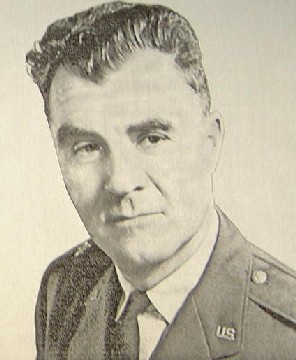 Brigadier General Paul Tibbets, USAF (ret.), has died at the age of 92. He is best known for being the pilot of the airplane that dropped the atomic bomb on Hiroshima, Japan on August 6, 1945, killing 140,000 people.
It's the kind of thing one goes to Hell for.
But then, if he had refused to drop the bomb, and had somehow prevented the bomb from ever being dropped, many hundreds of thousands of Japanese civilians would have died resisting the coming US invasion of Japan. Japanese cultural sites and treasures would have been destroyed all over the island nation. And of course, several hundred thousand American and allied troops would have died during the invasion as well.
In other words, stopping the bombing would also have been the kind of thing one goes to Hell for.
On the other hand, if General Tibbets (then a Colonel) had merely walked away from the mission, and let someone else take it, he would have been cravenly trying to save the purity of his own soul, while accomplishing nothing, and letting someone else face God's judgment.
That, too, is the kind of thing one goes to Hell for. At least according to Dante, who placed such selfish fools in its first circle.
Every one of Tibbets' choices with regard to the mission threw him on God's mercy. For him, God's Forgiveness was not an option, but an absolute necessity.
Perhaps you feel that your situation is different, that no choice you have ever made or will ever make will place you in a position of needing Forgiveness. That you will always have a choice between good and evil, and that you will always choose the good. May you be so lucky. May you be so blessed. You will be among the saints.
May God have mercy on you, Paul Tibbets. The same mercy I pray God shows to me when I am called to account for my life.
Subscribe to:
Posts (Atom)